
Erectile Dysfunction
What Age Does Erectile Dysfunction Start?
Dec
Overviews
Erectile dysfunction (ED), formerly known as impotence, is defined as the inability to obtain or sustain an erection. This condition can affect individuals with penises across all age groups and is not considered a normal part of aging. Although the probability of experiencing ED may rise with age, it is crucial to understand that aging itself does not directly lead to this condition. Rather, ED typically arises from a variety of underlying factors. Medical conditions, medications, physical trauma, and external influences can all contribute to the onset of erectile dysfunction.
ED manifests when there is inadequate blood flow to the penis, hindering the ability to achieve an erection sufficient for satisfactory sexual activity. It is a common concern, with many men facing challenges in achieving or maintaining an erection at some stage in their lives. Estimates indicate that around 30 million men in the United States are impacted by ED. This article explores the relationship between aging and erectile dysfunction, along with the associated risk factors, underlying causes, and potential treatment options.
The inability to get an erection strong enough for sexual activity is a sign of erectile dysfunction.
While it stands as a distinct medical condition, it is often more useful to view ED as a symptom of various underlying health issues, some of which may be quite serious. Determining the specific cause of erectile dysfunction can lead to more effective treatment and resolution of the problem.
Can Young People Have ED?

Erectile dysfunction is frequently regarded as an issue predominantly affecting older individuals; however, it can also occur in younger men. Research suggests that around 8% of men between the ages of 20 and 29, as well as 11% of those aged 30 to 39, are affected by this condition.
Additionally, statistics indicate an increasing number of individuals under the age of 40 who are seeking medical help for erectile dysfunction. A range of factors, both physical and emotional, can contribute to this condition and may arise at any age, highlighting their significance for overall sexual health.
| Some contributing factors include:
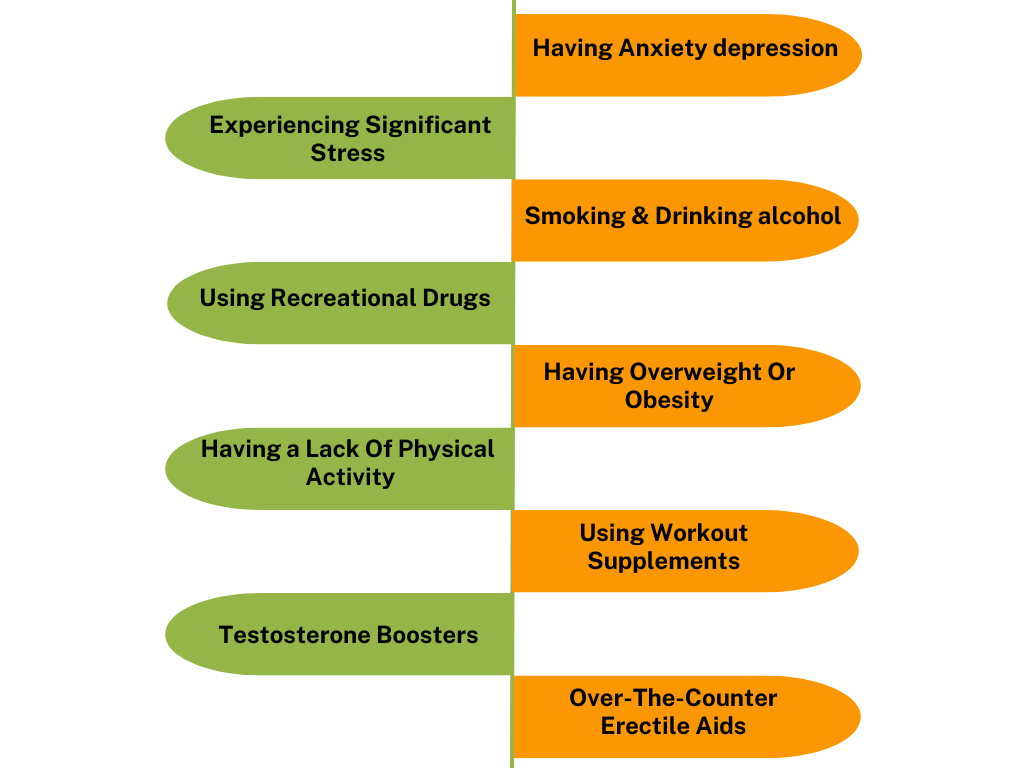
Adjusting certain factors, irrespective of age, such as lowering stress levels and increasing the frequency of physical activity, can improve erectile function and contribute to overall health.
Erectile Dysfunction Treatments for Older Men
The methods for addressing erectile dysfunction are largely similar across different age groups. The primary objective is to identify and treat the condition’s underlying causes, which may be physical or psychological. In the immediate term, medications like PDE-5 inhibitors, such as Viagra, are frequently utilized. However, as individuals grow older, the importance of maintaining overall health becomes more pronounced.
Adopting lifestyle changes—such as achieving a healthy weight, engaging in regular exercise, quitting smoking, managing stress, and limiting alcohol intake—can greatly improve general health and help mitigate erectile dysfunction. It is important to understand that pushing oneself too hard is not advisable. Starting with small, achievable modifications is recommended as an effective approach.
Older men need to be aware of the possible adverse interactions between certain medications Like Vidalista 20 and Cialis, as well as other treatments for erectile dysfunction (ED). Although Viagra may present risks for those with cardiovascular issues, there are situations where the benefits of improved sexual function could outweigh these concerns.
Men who are prescribed nitrate medications should refrain from using Viagra or any other phosphodiesterase type 5 (PDE-5) inhibitors, including Cialis or sildenafil. Furthermore, it is recommended to avoid ED medications if one is taking alpha-blockers or has recently suffered a stroke or heart attack.
When acquiring ED medications Super Tadarise & Suhagra 100, it is vital to do so through legal channels, such as a general practitioner or a trusted source like Mygenerix Online Doctor. This approach guarantees that prescriptions are both safe and suitable. It is imperative to be completely open about your medical history and to inform the healthcare provider of all medications currently being taken.
What Happens When I Have Erectile Dysfunction?
Erectile dysfunction is primarily characterized by the difficulty in obtaining or maintaining an erection. In many instances, this condition is temporary. However, it can adversely impact your sexual life if you struggle to maintain an erection for the duration of sexual activity.
Additionally, psychological effects may arise if you perceive that you are not meeting your partner’s needs, potentially leading to feelings of low self-worth or depression. Such emotional challenges can exacerbate the symptoms of ED. Furthermore, underlying medical issues, such as diabetes or hypertension, may contribute to the occurrence of erectile dysfunction, with symptoms of these conditions potentially coexisting with those of ED. Tadora and Silagra represent the most effective solutions for addressing the serious issue of impotence when it occurs.
How Does Age Affect ED?
Age serves as a significant risk factor for erectile dysfunction (ED). According to estimates, almost 40% of men may have some kind of ED by the time they are 40.
This risk escalates by roughly 10% with each subsequent decade. Although the likelihood of developing ED increases with age, it is important to note that aging itself does not directly lead to this condition; many men remain sexually active well into their 80.
Nevertheless, as individuals age, they are more prone to encounter medical issues that heighten the risk of ED. These conditions include:
- Type 2 diabetes
- High blood pressure, or hypertension
- Atherosclerosis refers to the buildup of plaque within the arterial walls.
- Low testosterone levels, or hypogonadism
- Obesity
Diabetes and atherosclerosis are, indeed, the two most common medical conditions that lead to erectile dysfunction (ED).
Furthermore, erectile difficulties may occur as a consequence of medications that are increasingly prescribed to individuals as they age, such as those for controlling blood pressure, sedatives, and treatments for ulcers.
Erectile Dysfunction Diagnosis: An Overview
After looking over your medical history and performing a physical examination, a doctor would often diagnose erectile dysfunction (ED).
When pursuing a diagnosis for ED, it is crucial to communicate the following information to your physician:
Any pre-existing medical issues should be disclosed to your physician. A detailed medical history can aid in pinpointing the root cause of your ED.
Reveal any medications you are currently using. Include the names of the medications, their dosages, and the length of time you have been taking them. Furthermore, indicate if you began to experience erectile difficulties after initiating a specific medication. Therefore, after using drugs like Aurogra 100 and Vidalista, it becomes essential to include good erectile dysfunction treatment to make sure you are obtaining all of these things.
During the physical examination, your physician will visually inspect your penis for any external factors that may be contributing to ED, such as injuries or lesions caused by sexually transmitted infections (STIs).
If there is a concern regarding an underlying medical condition, your physician may suggest a blood test to assess your blood glucose levels, which can help ascertain whether diabetes is a contributing factor.
| Your physician may also request additional tests, which may include:
- Blood tests to evaluate testosterone levels, lipid profiles, and other medical conditions
- Electrocardiogram (ECG) to detect possible cardiac abnormalities
- Ultrasound imaging to assess issues related to blood circulation
- Urinalysis to determine blood glucose levels
Medical Interventions For Erectile Dysfunction (ED)
Upon addressing the root cause of ED, the symptoms typically resolve independently. Should medication be necessary for ED, your physician will evaluate and recommend the most suitable option for your condition, including:
- Sildenafil (Viagra)
- Tadalafil (Cialis)
- Avanafil (Stendra)
Vilitra 40 is intended to assist you in getting or keeping an erection. If you have a medical condition like heart disease or are taking medications such as Malegra 200mg that may interact with these erectile dysfunction treatments, it may be recommended that you avoid their use.
In situations where oral medications are not appropriate, your doctor may suggest other treatment alternatives. One such alternative involves the use of mechanical devices, including vacuum erection devices or penile implants. Your doctor will offer instructions on the correct usage of these devices.
| Modifications to Current Medications
If a physician determines that erectile dysfunction (ED) is linked to a medication Vilitra 20 currently being taken, they may recommend modifying the medication or changing the dosage. It is essential to seek medical advice before implementing any alterations.
| Devices for Erection Support
Vacuum devices operate as mechanical pumps that promote an erection by drawing blood into the penis. ED rings are devices designed to encircle the base of the penis, aiding in the retention of blood flow and thereby facilitating the maintenance of an erection.
Natural remedies for erectile dysfunction (ED) are increasingly available without the need for a prescription. Nevertheless, scientific evidence supporting their effectiveness remains limited.
Additionally, some of these remedies may cause negative side effects or interact adversely with other medications. Therefore, it is essential to consult a healthcare professional before trying any over-the-counter options.
Moreover, although these natural remedies and supplements might offer short-term relief, they could potentially worsen erectile dysfunction in the long run. It is important to understand that how they function are different from the mechanisms of erectile dysfunction medications such as Viagra and Cialis, which do not affect erectile function beyond their designated time frame.
Lifestyle Changes to Combat Erectile Dysfunction
Erectile dysfunction (ED) can arise from a variety of lifestyle factors. To alleviate this issue, consider adopting the following changes:
- Quitting Tobacco
- Avoiding Certain Drugs, Such as Cocaine and Heroin
- Limiting Alcohol Intake
- Participating in Regular Exercise (Approximately Three Times a Week)
- Maintaining a Healthy Weight
Furthermore, these lifestyle changes can not only help in managing ED but also reduce the risk of other health issues. Additionally, employing stress management strategies, such as meditation or counseling, may be advantageous for ED associated with stress. Ensuring sufficient sleep and regular physical activity may also contribute to reducing stress-related erectile dysfunction. What precisely is in these erection-inducing pills, such as Tadalis, that allows you to achieve an erection?
Although the likelihood of experiencing ED generally increases with age, it is not unusual for younger males to face this issue. Factors such as stress, anxiety, and behaviors like smoking can contribute to ED at any age, while physical health issues, such as hypertension, are more commonly linked to older individuals. As a result, addressing ED may be more straightforward for younger patients, although effective treatments are available for all age demographics.
Last Remark
For many individuals, lifestyle changes can greatly improve or even resolve symptoms of erectile dysfunction (ED). There is no specific age at which one becomes vulnerable to ED. If you encounter ED at a younger age, it is essential to maintain a positive outlook. Many effective treatment options exist to support your health and potentially alleviate the condition. However, seeking medical guidance promptly and investigating suitable treatment strategies for ED is vital.The outlook for ED is promising, as it is a condition that can be effectively treated. While some underlying causes of ED may not have definitive solutions, there are numerous treatment options available to help achieve and maintain an erection adequate for sexual activity.
FAQs
1. Is erectile dysfunction a normal part of aging?
There is certainly a greater likelihood of this being the case as one gets older, but this is by no means an unavoidable consequence of aging. There are many men that can and do retain a healthy sexual function well into older age.
2. What are the primary causes of erectile dysfunction in different age groups?
In younger men, the main causes involve psychological issues and factors relating to lifestyle. In older men, the more major contributors include serious medical problems, especially pertaining to the heart and diabetes.
3. Can lifestyle changes help prevent or delay erectile dysfunction?
Yes, the odds of this problem arising can be decreased, and it can be pushed back through the adoption of a healthy diet, regular exercise, stress management, and no smoking or drinking a lot of alcohol.
4. Which medical problems may lead to a higher chance of getting impotence?
Problems like diabetes, heart disease, high blood pressure, and obesity usually mean a higher chance of getting impotence.
5. In what ways can mental illness contribute to impotence?
Stress, anxiety, and depression, and problems in relationships can create or worsen impotence, no matter how old the man is.
